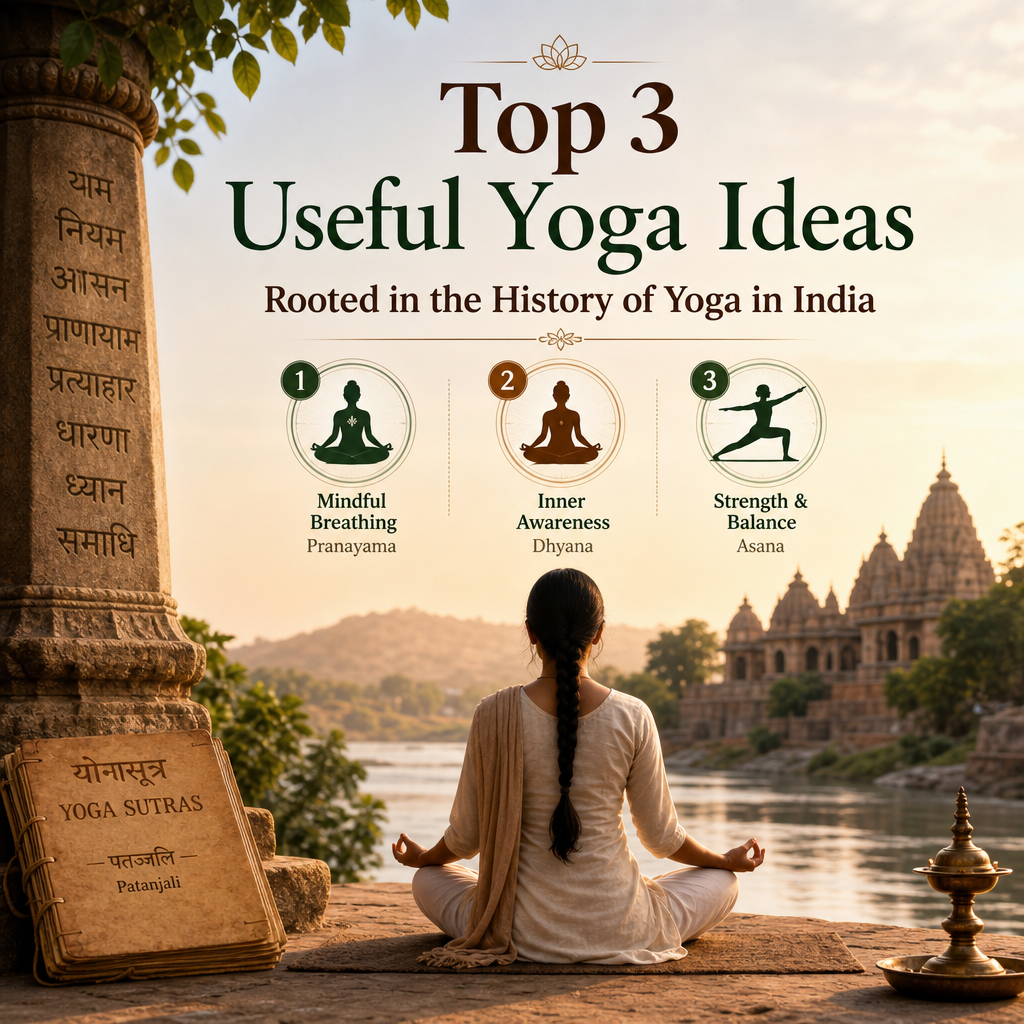


Yoga has been an integral part of wellness for thousands of years, deeply rooted in the ancient traditions of India. Understanding the history of yoga can deepen our appreciation and enthusiasm for the practice. By incorporating a few focused, beneficial ideas, you can significantly improve your experience on the mat. In this article, we’ll explore the top 3 useful yoga ideas that modern practitioners can embrace for better health, mindfulness, and harmony.
Top 3 Useful Yoga: Understanding the History of Yoga and Its Timeless Benefits

Originating in India over 5,000 years ago, yoga is a profound discipline that integrates body, mind, and spirit. The term “yoga” means union, symbolizing the connection between the self and the universe. Ancient sages developed yoga as a spiritual, meditative practice aimed at achieving enlightenment, mental clarity, and physical vitality.
Over time, various branches such as Hatha, Raja, Karma, and Bhakti Yoga emerged. Today’s popular physical practices focus mainly on asana (postures), breathwork, and meditation. Understanding this rich context inspires a more meaningful practice by honoring yoga’s original purpose—wholeness and balance.
Top 3 Useful Yoga Ideas to Enhance Your Daily Practice
1. Integrate Mindful Breathing Techniques (Pranayama)
One of the most useful yoga ideas involves tuning into your breath, or pranayama. Breath control serves as a bridge between mental and physical states, helping regulate stress and improve concentration. To start, try these breathing exercises:
- Nadi Shodhana (Alternate Nostril Breathing): Balances the nervous system and clears the mind.
- Ujjayi Breath: Builds heat and endurance during your asanas.
Use mindful breathing before, during, and after your practice to maximize relaxation and energy flow.
2. Focus on Basic Asanas for Foundation and Flexibility
While complex poses can be exciting, returning to fundamental postures improves strength, alignment, and comfort, reducing injury risk. Useful foundational poses include:
- Tadasana (Mountain Pose): Improves posture and grounding.
- Adho Mukha Svanasana (Downward-Facing Dog): Stretches the entire body and energizes.
- Balasana (Child’s Pose): Opens the hips and promotes calm.
These foundational asanas connect you more deeply with your body’s needs. Hold each pose for several breaths while noticing sensations to encourage overall body awareness and gradual flexibility improvements.
3. End with Meditation for Mental Clarity
The ultimate essence of yoga involves calming the mind, and meditation perfectly complements physical movement. A simple meditation practice at the end of your session fosters deep mental relaxation and focus. Some useful methods include:
- Focused Attention on Breath: Count breath cycles or watch breath entering and exiting.
- Body Scan Meditation: Tune into each body part, releasing emerging tension.
- Mantra Meditation: Repeat affirmations or traditional chants for heightened concentration.
Even a short 5-minute meditation amplifies balance gained during the asana phase and nourishes your self-awareness throughout the day.
Bonus: Incorporating Yoga Philosophy from India
Don’t limit yourself to physical aspects—explore sutras and yoga philosophy originating from India, such as:
- The Eight Limbs of Yoga by Patanjali emphasize ethics, posture, breath, and meditation as a comprehensive lifestyle.
- Central concepts include Ahimsa (non-violence), Satya (truthfulness), and Dhyana (meditation), guiding the practitioner toward more conscious living.
Integrating these deeper teachings aligns posture, breath, and mind toward holistic wellbeing, honoring yoga’s 5000-year history. To learn more about the origins and evolution of yoga in India, visit this detailed article.
Final Thoughts on Top 3 Useful Yoga Ideas
These top 3 useful yoga ideas—mindful breathing, foundational asanas, and meditation—offer powerful and practical ways to enrich any yoga journey. Whether you are a beginner or seasoned practitioner, reconnecting with the age-old roots from India and weaving these principles into your routine will transform not just your physical strength but also your mental calmness.
Embrace your next session with curiosity, grounded in the ancient wisdom of yoga, and watch how your well-being—and life in general—shifts toward harmony. For further reading on yoga’s historical context and practical ideas, consider exploring Yoga Journal, a reputable source for yoga knowledge and practice tips.
Happy practicing!