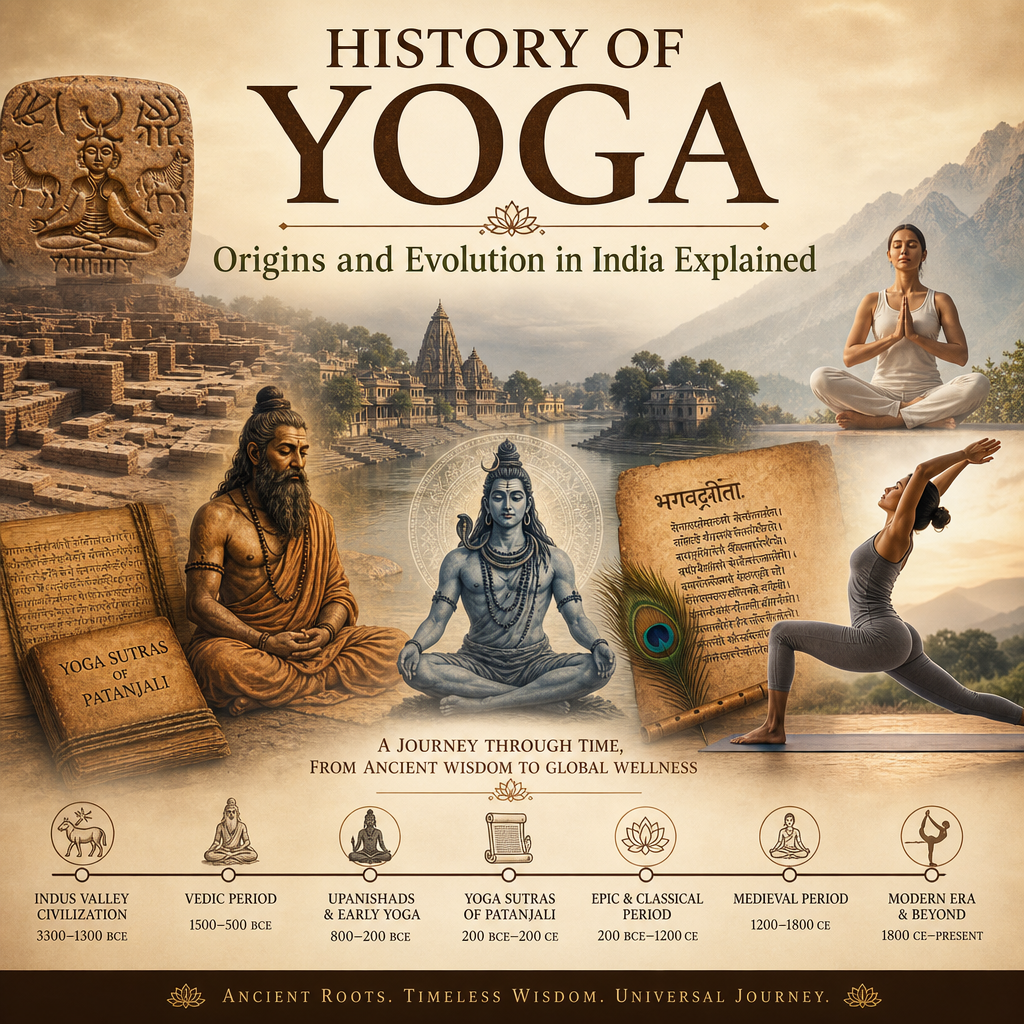


The History of Yoga: A Journey Through Time
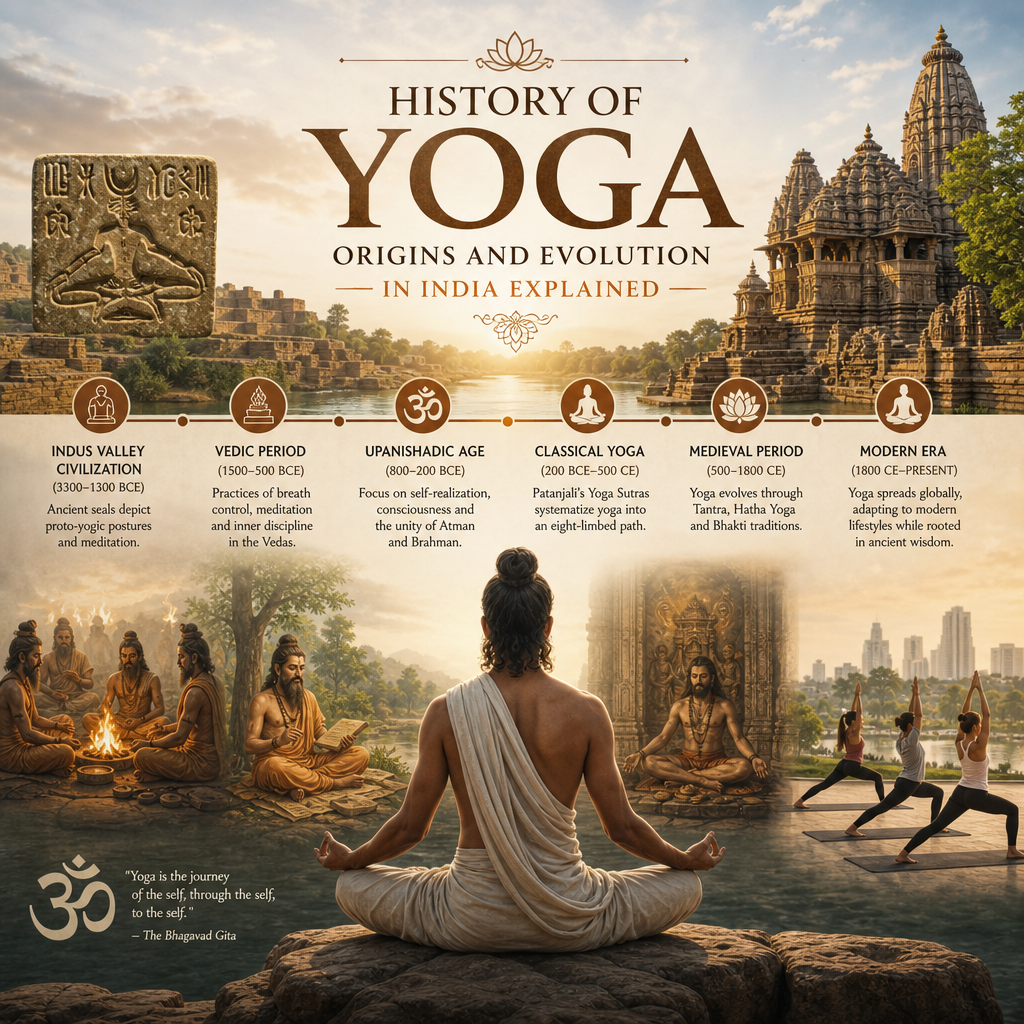
Yoga is more than just a popular form of exercise; it is an ancient practice with deep spiritual and cultural roots. The history of yoga is rich and complex, originating in India thousands of years ago and evolving over time into the diverse discipline we know today. Understanding this history can deepen our appreciation for yoga’s role in physical, mental, and spiritual well-being.
Origins of Yoga in India
The history of yoga begins in India, where it was first developed as a spiritual practice. The earliest references to yoga are found in the Vedas, ancient sacred texts composed around 1500 BCE. These texts include hymns, mantras, and rituals that laid the foundation for Indian spiritual thought.
However, it was the Upanishads, philosophical texts written between 800 and 400 BCE, that truly expanded on yoga’s spiritual and metaphysical dimensions. They introduced key concepts such as meditation, self-realization, and the unity of the individual soul (Atman) with the universal soul (Brahman).
Classical Yoga and Patanjali’s Yoga Sutras
The “classical” period of yoga is closely associated with the sage Patanjali, who is traditionally credited with systematizing yoga philosophy in his work, the Yoga Sutras, around the 2nd century BCE. This text outlines an eightfold path known as Ashtanga Yoga, which serves as a framework for reaching spiritual enlightenment.
The eight limbs of Patanjali’s yoga include:
- Yama – ethical disciplines
- Niyama – self-observances
- Asana – physical postures
- Pranayama – breath control
- Pratyahara – withdrawal of the senses
- Dharana – concentration
- Dhyana – meditation
- Samadhi – ultimate absorption or enlightenment
This comprehensive system defines yoga as a way to control the mind and senses, leading to liberation from suffering.
Yoga’s Evolution Through the Ages
For centuries, yoga was practiced mainly by ascetics and monks in India, emphasizing meditation, ethical living, and spiritual discipline rather than physical postures. Over time, various schools of yoga developed, each with different methods and philosophies:
- Hatha Yoga focused on physical techniques to prepare the body for meditation. It emerged around the 10th century CE and introduced many postures (asanas) and breathing exercises (pranayama) still practiced today.
- Bhakti Yoga emphasized devotion and love for a personal god, making spirituality accessible to all through worship and singing.
- Karma Yoga stressed selfless action and duty as a path to spiritual liberation.
- Jnana Yoga centered on intellectual inquiry and wisdom for self-realization.
Yoga’s Arrival in the West
The history of yoga crossed continents during the late 19th and early 20th centuries, when Indian monks and teachers brought yoga philosophy and practice to Western audiences. Swami Vivekananda, a key figure in this transmission, introduced yoga primarily as a path of meditation and spiritual realization at the 1893 World’s Parliament of Religions in Chicago.
Later, teachers such as T. Krishnamacharya, B.K.S. Iyengar, and Pattabhi Jois developed styles of yoga centered on physical postures, which gained popularity worldwide during the 20th century. This shift helped to popularize yoga as a form of physical fitness and stress relief, blending its ancient spiritual roots with modern health practices.
The Modern Practice of Yoga Today
Today, yoga is a global phenomenon practiced by millions from all walks of life. While many embrace yoga as exercise, its broader historical teachings remind practitioners of its original purpose: to integrate body, mind, and spirit.
Modern yoga styles vary widely, but most still reflect the key elements from the history of yoga in India:
- Mindfulness and meditation
- Controlled breathing
- Ethical and mental discipline
- Physical postures inspired by classical asanas
Yoga’s enduring appeal lies in this holistic approach, offering a path toward balance and well-being.
Conclusion
The history of yoga is a fascinating narrative deeply interwoven with India’s spiritual traditions and cultural heritage. From ancient texts and sages to modern studios worldwide, yoga’s journey highlights both its timeless wisdom and adaptability. By appreciating the history of yoga, practitioners can connect more deeply with its roots, embracing it not just as exercise, but as a profound method for personal growth and enlightenment.