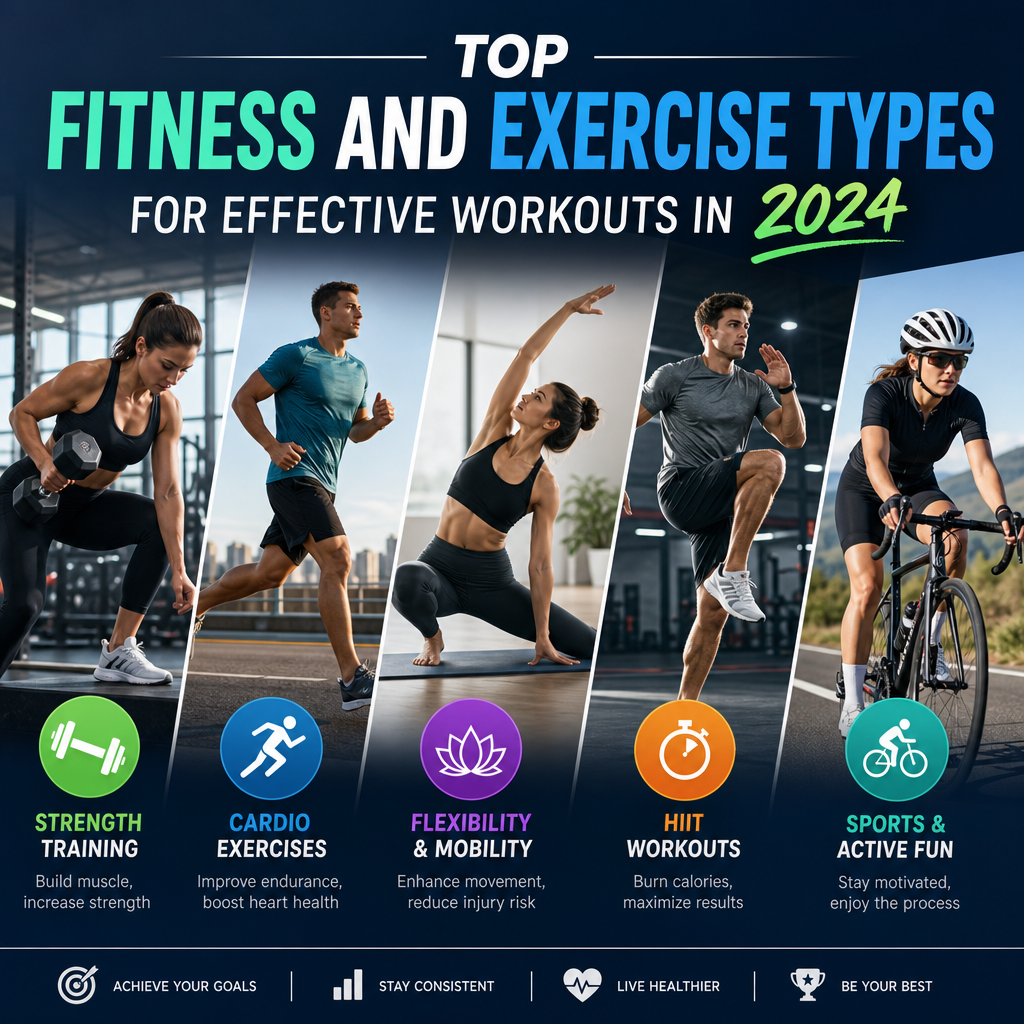


The Best Types of Fitness: Finding the Right Exercise for You

When it comes to improving your health, fitness and exercise are two of the most powerful tools at your disposal. But with so many types of fitness activities available, choosing the right one for your goals and lifestyle can be overwhelming. Whether you want to build strength, improve cardiovascular health, or increase flexibility, understanding the best types of fitness can help you stay motivated and achieve lasting results.
In this article, we explore popular fitness styles and how they benefit your body and mind.
Cardiovascular Fitness: Boost Your Heart Health
What Is Cardiovascular Fitness?
Cardiovascular fitness refers to exercises that increase your heart rate and breathing for an extended period. This type improves the efficiency of your heart, lungs, and blood vessels, making daily activities easier and reducing the risk of chronic diseases.
Popular Cardiovascular Exercises
- Running or jogging
- Cycling
- Swimming
- Brisk walking
- Aerobic dance classes
- Rowing
Benefits of Cardiovascular Fitness
- Improves heart and lung function
- Increases stamina and endurance
- Aids in weight management
- Reduces stress and boosts mood
Strength Training: Build Muscle and Bone Density
What Is Strength Training?
Strength training focuses on using resistance to cause muscular contraction, which builds strength, muscle mass, and bone density. It includes lifting weights, using resistance bands, or bodyweight exercises.
Common Strength Training Exercises
- Weight lifting (dumbbells, barbells, machines)
- Push-ups and pull-ups
- Squats and lunges
- Resistance band workouts
- Bodyweight exercises like planks
Benefits of Strength Training
- Enhances metabolism and fat loss
- Improves posture and balance
- Increases bone density to prevent osteoporosis
- Supports joint health and injury prevention
Flexibility Training: Enhance Mobility and Reduce Injuries
What Is Flexibility Training?
Flexibility training involves stretching exercises designed to improve the range of motion of muscles and joints. It is crucial for injury prevention and overall mobility, especially as you age.
Effective Flexibility Exercises
- Static stretching (holding stretches)
- Dynamic stretching (moving through stretches)
- Yoga
- Pilates
Benefits of Flexibility Training
- Increases joint mobility
- Reduces muscle tension and soreness
- Improves posture
- Enhances athletic performance
Functional Fitness: Prepare for Everyday Movements
What Is Functional Fitness?
Functional fitness trains your body for daily activities by focusing on movements that mimic real-life situations, such as lifting, bending, and reaching. This type of exercise improves overall physical function and reduces the risk of injury.
Examples of Functional Exercises
- Kettlebell swings
- Medicine ball throws
- Squats and lunges
- Core stability exercises (planks, bridges)
- Balance drills
Benefits of Functional Fitness
- Improves coordination and balance
- Makes everyday tasks easier
- Enhances core strength and stability
- Supports injury prevention
Mind-Body Fitness: Connect Your Mental and Physical Health
What Is Mind-Body Fitness?
Mind-body fitness integrates physical exercise with mental focus, breathing, and relaxation. This approach helps reduce stress while promoting both physical and emotional well-being.
Popular Mind-Body Fitness Activities
- Yoga
- Tai Chi
- Pilates
- Meditation combined with stretching
Benefits of Mind-Body Fitness
- Reduces anxiety and depression
- Enhances body awareness and control
- Improves flexibility and strength
- Boosts mental clarity and relaxation
How to Choose the Best Type of Fitness for You
Selecting the best types of fitness depends largely on your personal goals, preferences, and physical condition. Here are some tips to help you decide:
- Identify your primary goal: Are you aiming to lose weight, build muscle, enhance flexibility, or just stay active?
- Consider your lifestyle: Choose exercises that fit your schedule and environment, whether at home, a gym, or outdoors.
- Mix it up: A well-rounded fitness routine often includes a combination of cardiovascular, strength, and flexibility training.
- Listen to your body: Start with manageable workouts and increase intensity gradually to avoid injury.
- Enjoy the process: Finding an exercise you enjoy increases consistency and long-term success.
Conclusion
The best types of fitness are those that align with your goals and that you can maintain consistently. Whether you prefer heart-pumping cardio sessions, muscle-building strength exercises, stretching for flexibility, or mindful mind-body workouts, exercise is essential for a healthy, balanced life. Embrace a variety of fitness styles to maximize your health benefits and keep your routine engaging.
Remember, the key to lifelong fitness is making exercise an enjoyable and regular part of your lifestyle. Start today, find what moves you, and reap the endless rewards exercise can offer!